How to make real progress in five-minute sessions
Why short sessions can still feel like progress
Most of us play in gaps. A few minutes before a meeting, a pause between tasks, a wait for something to load. In a window that short, it is easy to click around, lose the thread and close the tab with the feeling that nothing happened. The fix is not to play faster. It is to decide, before the first click, what a good five minutes would look like.
This guide shows how to do that with three games that suit short sittings in different ways: Dino Fun Adventure, Squirrel Hero and Insect Pic Puzzles.
The one-goal rule
Pick a single target before you start, and make it small enough to finish. Good short-session goals share three features.
- They are specific. Finish one stage, find one golden egg, rebuild one picture.
- They have an end. You know when you have reached them, so you also know when to stop.
- They teach something. Even a goal you miss shows you a little more about how the game works.
Everything else in this guide is a way to apply that rule.
Dino Fun Adventure and the stage-sized goal
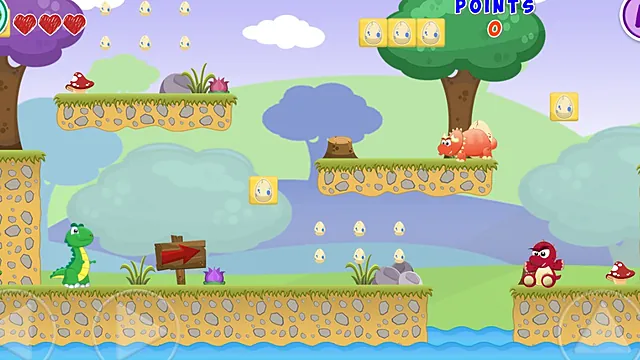
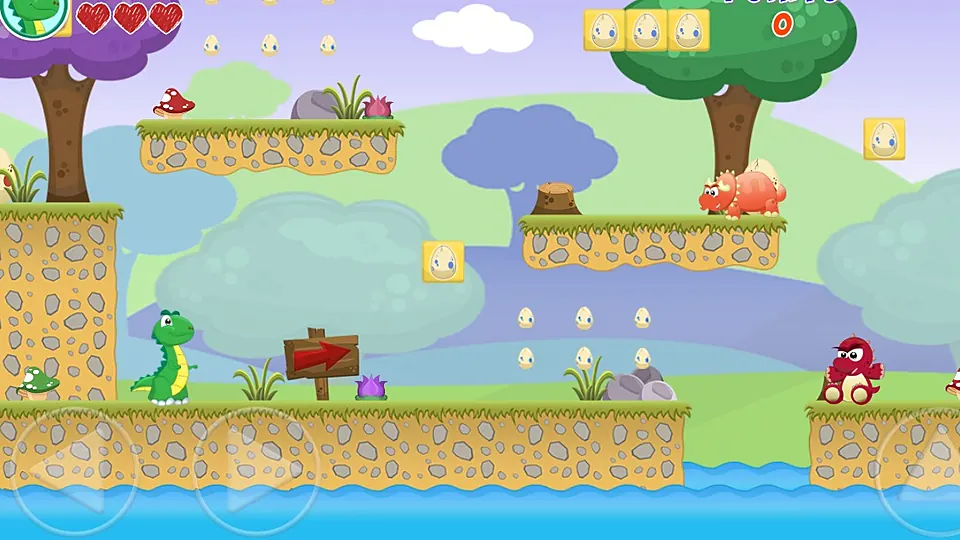
A green dino walks across grassy stone ledges, with small eggs floating in rows above the ground. The path runs through three stages, and each stage hides three large golden eggs. You need all three to pass a stage. A points counter, a row of hearts and a pause button sit on screen.
A stage is a natural unit for one sitting. Aim to work on a single stage and nothing more. Collect the small eggs on your way, jump on enemies to gain points and look around the whole stage for the golden eggs. If time runs out before you find all three, you have still learned where some of them are, and the next sitting can begin with that knowledge. The pause button is useful here. Press it when your five minutes are up, instead of leaving the dino mid-jump.
A sample plan
- Choose the stage you want to work on.
- Spend the first minute walking it and looking for the golden eggs.
- Use the remaining time to collect eggs and jump on enemies along a route you now know.
- Pause at a calm spot and note which golden eggs you still need.
Squirrel Hero and the single well-planned jump
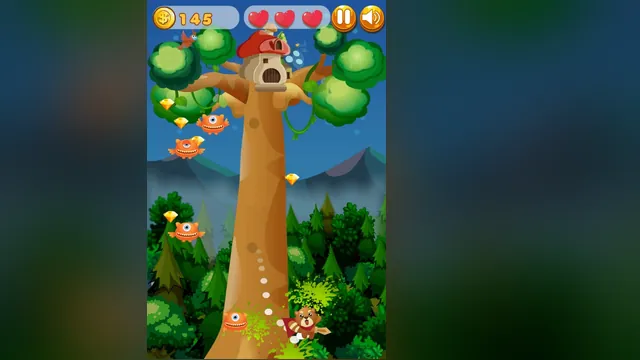
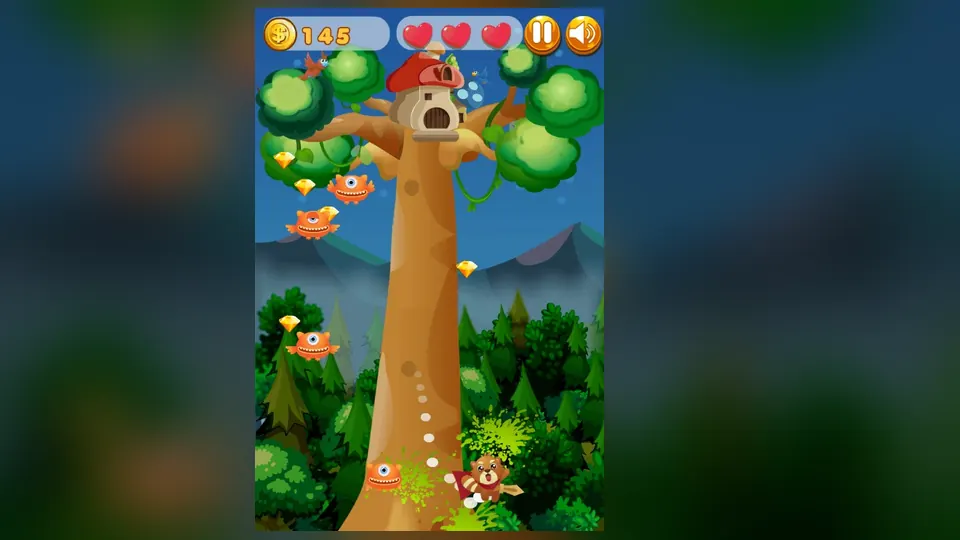
A squirrel waits in a hollow high in a tree, while orange one-eyed creatures drift around the trunk below. After each jump, a dotted trail marks the squirrel's path through the air and a green splash appears where it lands. The better you plan the trajectory, the more aliens one leap can reach.
Here the goal can be even smaller than a stage. Try setting out to make a single jump that reaches as many aliens as possible. Study how they are spread across the trunk, choose a line that crosses the thickest group, and then launch. Watch the dotted trail and the splash to see how close your plan was to what happened. Aim for the aliens nearest the hollow first, because keeping them from getting closer is the point of the round.
This works well for a short break because each jump is a complete little puzzle. You think, you act, you see the result. Five minutes of careful jumps teaches you more than five minutes of rushed ones.
Insect Pic Puzzles and the finished picture
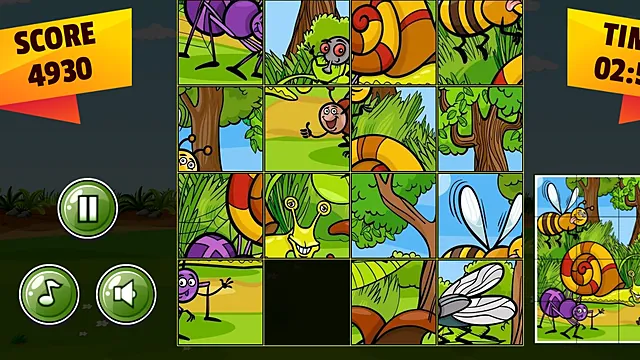
A cartoon scene of insects has been cut into square tiles and shuffled. One square is left blank, and you touch or click a block next to the gap to slide it in. A small preview of the picture sits beside the board, and the points fall as the seconds pass.
The goal here is built in: one rebuilt picture. A round ends when the picture is complete, which gives a clear stopping point. Because points go down each second, a short plan helps. Compare the board with the preview before your first move, begin with tiles that carry clear details, and work row by row so finished tiles stay in place. Plan two or three moves ahead instead of sliding at random, and avoid undoing a move you just made.
Matching the game to the time you have
| Game | Short goal | Natural pause |
|---|---|---|
| Dino Fun Adventure | One stage | Press pause |
| Squirrel Hero | One strong jump | After a landing |
| Insect Pic Puzzles | One finished picture | Picture complete |
General habits for short sittings
Warm up on purpose
Your first minute is often your worst. Treat it as a warm-up and keep the stakes low. Look at the screen, check the controls and let your hands settle before you try anything clever.
Stop at a calm moment
Ending a session in the middle of a tense moment makes it harder to return. Finish the stage, wait for the landing or complete the picture first. A clean stop leaves you with a sense of progress and a clear place to resume.
Keep a tiny note
If you are working toward something, such as the last golden egg in a stage, remember it in a few words. A simple thought like where the unexplored ledge was makes the next sitting start faster.
Do not chase a bad round
If a sitting goes badly, resist the urge to squeeze in one more try with a rushed hand. Short sessions reward a calm mind. Step away, and come back when you can give the game a proper few minutes.
Choose games that fit the device
On a phone, a tap-based game is usually easier to start in a hurry than one that needs a keyboard. On a laptop, the mouse is often the quickest way in. Check the controls before you commit to a goal.
Building progress over many sittings
Small sessions add up. Three stages of Dino Fun Adventure can be worked through one sitting at a time. Squirrel Hero rewards the habit of planning a trajectory, and that habit grows with repetition. Insect Pic Puzzles gets easier as you learn to read the preview and the order of the tiles. Progress in a short sitting rarely feels dramatic, but it is real, and it is easier to keep up than a long session you have to schedule.
FAQ
How long is a good short session?
Five minutes is a useful target, but the right length is whatever fits your gap. What matters more is having a goal that finishes inside it.
Should I replay the same stage or move on?
If you did not reach your goal, replaying is fine because you now know more about the layout. If you did, move on to the next stage. In Dino Fun Adventure you need all three golden eggs to pass a stage, so a second look at the same stage often pays off.
What if I only have a minute?
Pick the smallest goal in the game, such as a single jump in Squirrel Hero or the first few tiles in Insect Pic Puzzles. A minute is enough to practise one habit, and that still counts.