Battle Chess Puzzle
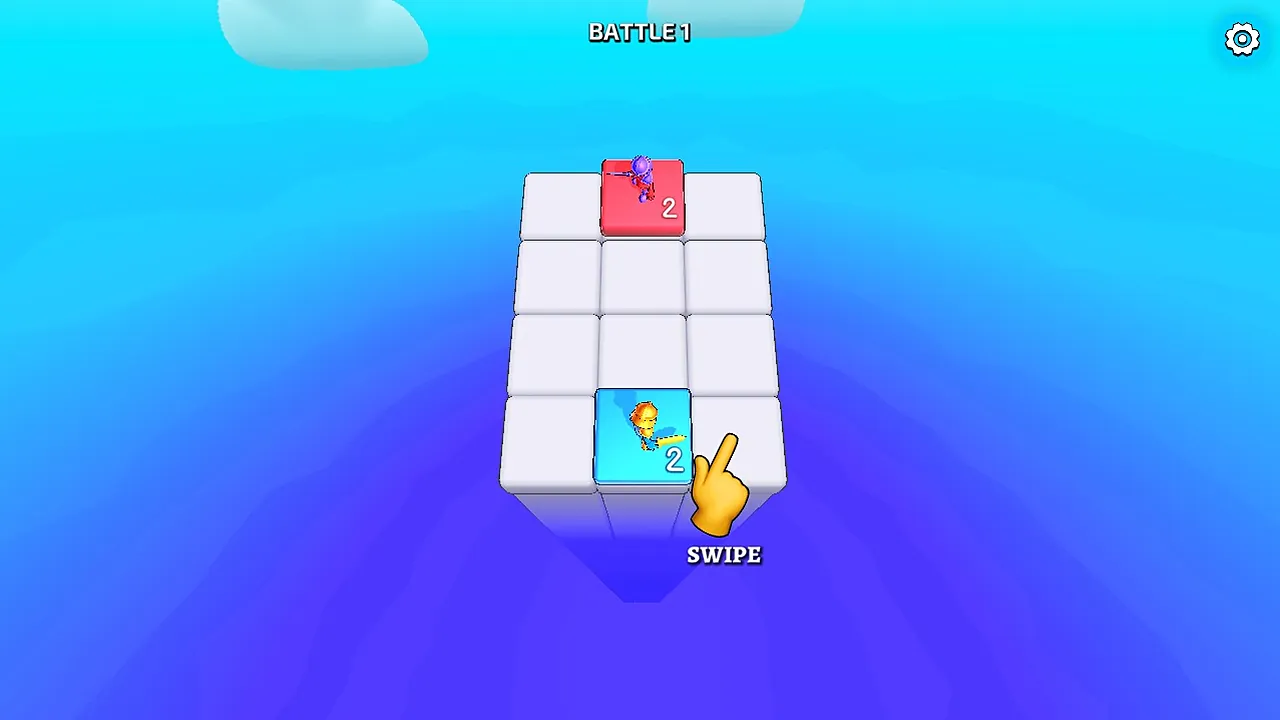
One gesture drives the whole game. Swipe sideways, and every knight on the board moves together.
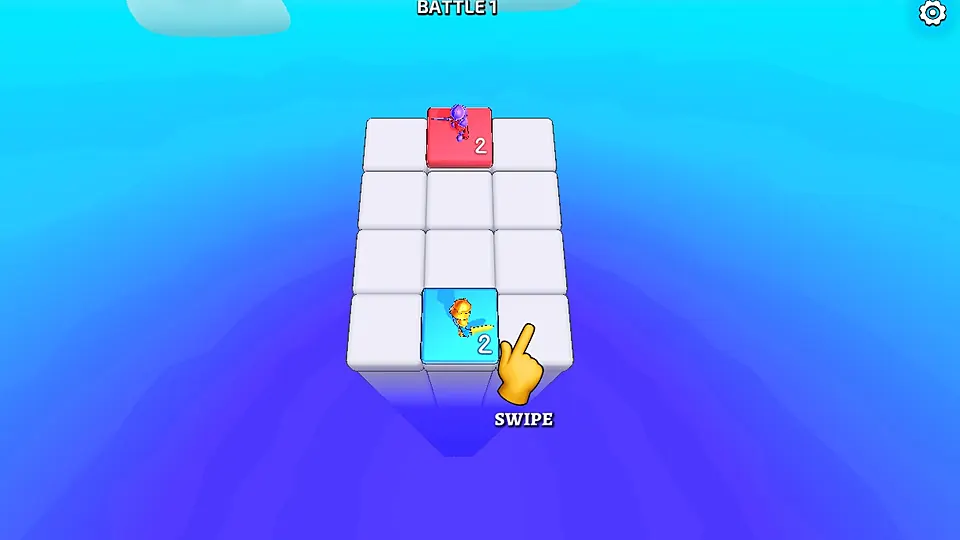
The controls follow the 2048 style, with your pieces sliding across a small grid of white tiles floating on a bright blue gradient. A hand icon shows the swipe gesture. Each knight tile carries a strength number, and the board shows a blue knight and a red one. Merging your knights raises their strength, while the opposing piece moves along with you, so every swipe has a cost. The result feels closer to a small tactics puzzle than to a reflex test, and you read the board before you commit. Because all your pieces slide at once, you plan the whole board rather than one piece.
How to play
- When the board appears, look at your knights and at the red piece, and compare their strength numbers.
- Swipe sideways to slide all your knights in one direction.
- Merge your knights to build up strength.
- Go after a knight whose strength is less than or equal to yours.
- Think a move ahead, since the opposing piece moves with you.
Use the surroundings and even give up a piece if it helps you win. Develop a plan before you swipe. A move that merges two knights can look tempting, but check where the red piece will stand afterwards. Each board is a short puzzle of its own.
Controls
| Input | Action |
|---|---|
| Swipe sideways | Move all your knights in that direction |
| Mouse drag or touch swipe | Perform the sideways swipe |
Tips
- Compare strength numbers before every swipe, because a knight can only go after one that is equal or lower.
- Merge your knights when you can, since that raises their strength.
- Plan one swipe ahead, because the opposing piece moves when you do.
- Use the grid edges to line pieces up before you slide them.
- Sacrifice a piece only when it clearly helps you win the position.
Screenshots
Our take
The best moment comes when a sideways swipe lines up a merge and leaves your stronger knight next to a weaker opposing piece. That clean payoff is the draw. A beginner gets a simple control, one swipe, and a clear rule about strength numbers, so the first moves are easy to read. A more experienced player gets room to plan, because the opposing piece moves alongside you and the surroundings can be used. The trade-off is a small board with a single gesture, so depth comes from thinking, not from extra controls.
Questions and answers
How does the strength number work?
Each knight shows a strength number. You can go after a knight whose strength is less than or equal to yours, and merging your own knights builds strength.
What should I do when I am stuck?
Think ahead. The opposing piece moves when you do, so use the surroundings and consider giving up a piece if it helps you win.
Who can play it?
Anyone who can swipe sideways. The controls work like 2048, and the strategy comes from planning each move.