How number gates and merging work in browser games
In these games, the number on screen decides the move, and the skill is checking before you commit. Each title turns that idea into a different game: running through gates, steering arrows, hitting smaller numbers and swiping pieces together.
What is a number gate?
A gate is a spot on the path that changes your number. You pass through it, and the number on it is applied to what you carry. Positive gates add or multiply. Negative gates take away.
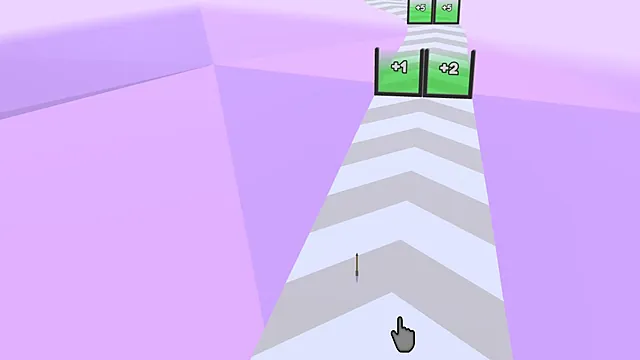
Arrow Challenge shows the idea most clearly. You steer arrows through numbered gates to grow a stack, then clear the guards waiting at the end of the path. The gates come in pairs, so you are always choosing one side of the path over the other, and the choice is made as the next pair comes into view.
Adding versus multiplying
A gate marked +5 adds five. A gate marked x2 doubles what you have. With a small stack, +5 is often the bigger gain. With a decent stack, x2 gains more, because a multiplier grows with the number it works on. Read both gates ahead before you move, and avoid low numbers like +1 when a +5 is within reach.
Steering matters too
The path curves, so late corrections can cost you the gate you wanted. Steer early and keep your pointer or finger steady so the arrows do not drift between gates.
What changes when the gates can hurt you?
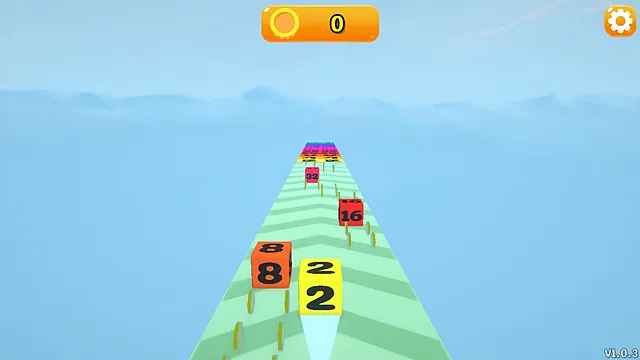
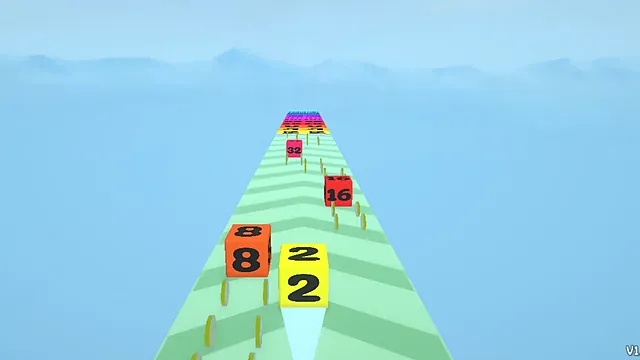
2048 Runner adds negative gates. You hold the left mouse button and swipe left or right to steer your cube along a track. Pass through positive gates and avoid negative ones, because those can drag your number toward zero, which ends your progress through the level. You need to reach the end with a number at or above the objective, so check that objective as you run.
The same game introduces merging. Steer into a cube with the same number as yours to merge with it. Cubes with a different number cannot be merged, so steer wide of them. Merge matching cubes early so your number is high when the objective comes.
What if the rule is about smaller numbers?
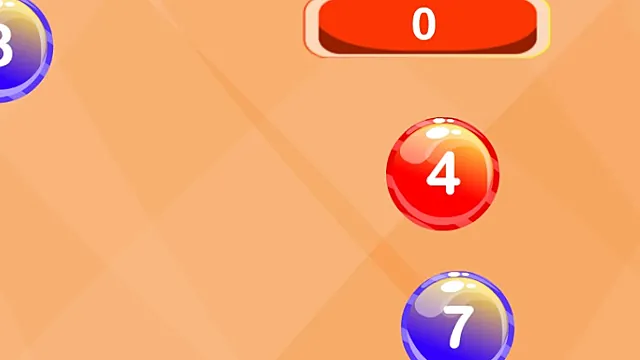
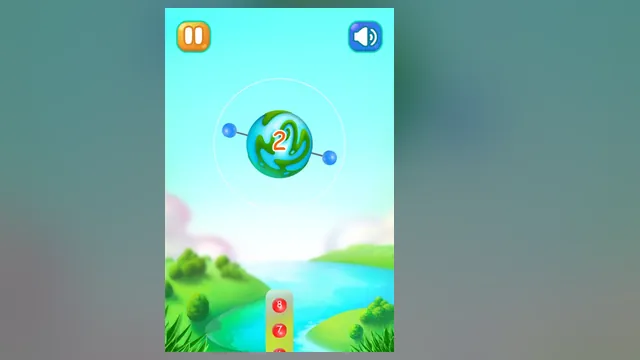
EG Eatable Numbers flips the logic. You aim a red numbered ball at blue balls, and you score by hitting ones that carry a smaller number than your own. Bigger blue balls are the ones to avoid.
- Read the red number in the centre.
- Compare it with each blue ball around it.
- Pick one that is smaller.
- Click or touch to send the red ball at it.
- Read the board again.
As the game gradually speeds up, those comparisons have to come faster. Ignore bigger blue balls even when they are the closest ones, and wait for a smaller number to come into view instead of forcing a bad hit.
How does merging work as a puzzle?
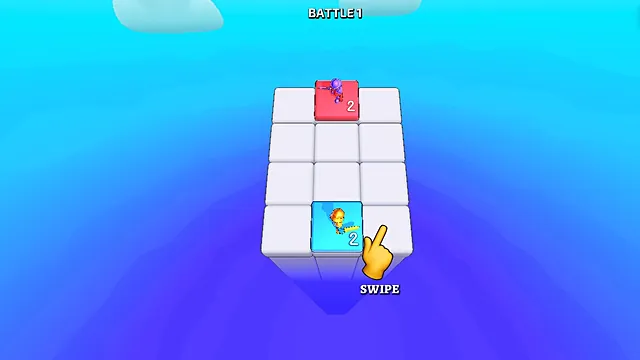
Battle Chess: Puzzle borrows the merging idea from 2048. You swipe sideways to slide all your knights in one direction, and merging knights builds up their strength. Each piece carries a strength number, and a knight can only go after one whose strength is equal or lower.
The opposing piece moves when you do, so plan one swipe ahead. A move that merges two knights can look tempting, but check where the red piece will stand afterwards. Use the surroundings to line pieces up before you swipe. The result feels closer to a small tactics puzzle than a reflex test, so read the board before each swipe.
How do the four compare?
| Game | Number rule | Input | Pace |
|---|---|---|---|
| Arrow Challenge | Pick the best gate | Mouse or finger | Quick choices |
| 2048 Runner | Merge equal, avoid negative | Hold and swipe | Per level |
| EG Eatable Numbers | Hit only smaller | Click or touch | Speeds up |
| Battle Chess: Puzzle | Merge, then take weaker pieces | Swipe sideways | Your own |
What if you lose track of the numbers?
Slow down and name them. Say your number, then the number ahead. In 2048 Runner, glance at your own number before each gate. In EG Eatable Numbers, start at the centre, where the red ball sits, and read the board outward. Saying the comparison in your head before a click keeps each press deliberate.
The presentation helps as well. In 2048 Runner, each cube has its own number and colour, so you can read your choices at a glance.
Where should a beginner start?
Start with Arrow Challenge. Its rule is the easiest to read: bigger numbers are better, and one pointer is all it takes. Next, try EG Eatable Numbers for the opposite rule, where the smaller number is the goal. Move on to 2048 Runner when you are ready to watch a total that can fall, and finish with Battle Chess: Puzzle if you enjoy planning one swipe ahead.
One habit works in all of them: read the numbers before you move. A short look at what is ahead, and at your own total, helps you avoid early mistakes.